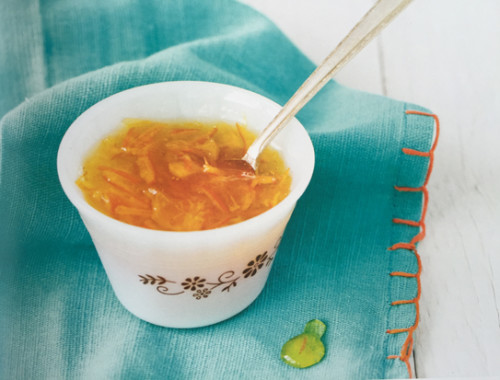
Quince-Orange-Cardamom Marmalade

“They dined on mince and slices of quince,
Which they ate with a runcible spoon;
And hand in hand on the edge of the sand
They danced by the light of the moon,
The moon,
The moon,
They danced by the light of the moon.”

~ from The Owl and the Pussycat, by Edward Lear

Like the Owl with the Pussycat, I have fallen in love with quince. Such a venerable fruit. Did you know that the first-ever jelly was most likely made from quince? Or that this fruit gave us the word “marmalade,” after “marmelo,” the Portuguese word for quince? I loved learning these things.

The plural of quince is quince. Nuff said.

Until a few short weeks ago, I was not aware of even having seen a quince. Then my friend Bridget told me her friend Suzanne had quince and would I like some? Why yes, I would. And I would like to thank Suzanne not only for introducing me to the wonderful world of quince, but for sending along a jar of her own quince chutney — which was so good I almost fainted. (If I can get her permission, I would love to share her recipe here someday. What do you say, Suzanne?)

Beautiful quince from The Apple Farm in Philo, California

Now, about this marmelo marmalade. I am crazy for it, and perhaps the coolest thing is that I made it by accident. I had all the ingredients prepped for making Quince, Orange, and Cardamom preserves from Mes Confitures: I had prepared my quince juice the day before, sliced my remaining uncooked quince, poached the oranges. It was 10 p.m. and I was ready to get on with it. Then I looked more closely at the recipe and realized that what I had in front of me could be a canning train wreck.

The recipe in Mes Confitures calls for apple or pear quince — and what I had was the kind of quince most of us get: pineapple quince. I remembered from my reading that pineapple quince need to cook for a long time before they’re good to eat, while apple quince is one of the only varieties that can be eaten out of hand. My late-night conclusion was that the cooking time for Christine Ferber’s preserve was going to be way too short for my quince. I called the whole thing off.

But what was I going to do with the ingredients? Quince jelly, sure, but what about the orange slices that were resting so softly in their cardamom-infused bath? I popped them into the fridge overnight and decided to find out whether I could make a good marmalade by simply combining them with the quince juice. It worked so well I made it four times more. It’s definitely an accident worth repeating, if you’d care to join me.

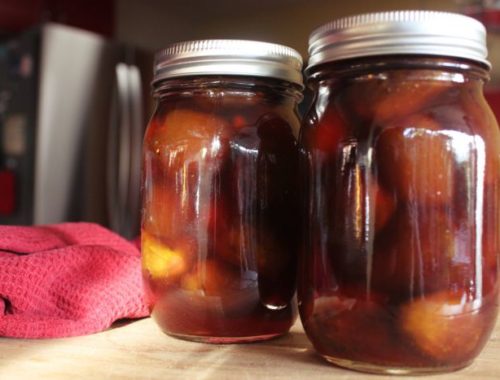
On the far right, jars from a batch with only two oranges. Three is better.

Quince-Orange-Cardamom Marmalade

4 cups quince juice (4 or 5 good-sized quince to start)
3/4 cup plus 4 cups sugar
3 medium oranges
1 teaspoon cracked cardamom
2 cups water
fresh juice of 1 lemon, strained

Day One: Prepare the Quince Juice and Poach the Oranges

Quince Juice

1. Wipe your quince with a clean towel to remove the fuzz and wash them in cold water. Remove any remaining stems and then cut the quince into eighths.

2. Put the quince in a nonreactive preserving pan or stockpot and cover them with water. Bring to a boil and simmer on low heat for 2 to 2 1/2 hours. Every 20 minutes or so, give them a stir and press them against the side of the pot with a big spoon. If too much water boils off (that is, the fruit is not submerged or the liquid starts to look suspiciously thick) add a little more.

3. After at least 2 hours, when the liquid is a lovely tawny color and just a bit syrupy, collect the juice by straining the fruit through a jelly bag or fine stainless steel strainer. I find the easiest way to do this is to suspend my strainer in a stockpot, add the quince to the strainer, cover the whole deal with plastic wrap, and transfer it to the fridge where it can happily drip overnight.

I wish I glowed like quince juice in the morning.
Poached Orange Slices

1. While you are cooking your quince for juice, go to work on the oranges. Begin by thinly slicing the oranges as described in How to Slice Citrus Fruit for Marmalade. Retain the pithy centers and any extra bits. Squeeze these leftovers to extract as much juice as you can, then strain the juice and set it aside. (Now you can discard the pith you’ve just squeezed.)

2. Place the oranges in a nonreactive pan or skillet with the orange juice. Add 3/4 cup sugar and enough water so everything floats nicely (1 1/2 to 2 cups to start).

3. Bring the oranges to boil and reduce to a simmer. Continue simmering for about 30 minutes, until the rind  has softened. (I know the oranges are done when I enjoy eating one straight from the pan.) Occasionally give the oranges a gentle stir, and continue to add water if necessary, so they don’t dry out. As the oranges cook, periodically skim the gunky foam that gathers on top.

4. About 5 minutes before the oranges are done, add 1 teaspoon fresh cracked cardamom to the pan. (I crack the cardamom with a mortar and pestle, discard the pods, and further crush what remains.) Transfer the orange slices and remaining liquid to a glass or ceramic bowl and place them in the fridge overnight.

Orange slices relax in the pan before getting poached.

DayTwo: Make Your Marmalade

1. Sterilize your jars and put 5 teaspoons on a plate in the freezer to test your marmalade for doneness later.

2. Quickly strain your quince juice a final time to remove any lingering solids. (I use a boiled jelly bag for this. A fine strainer will also work.)

3. Measure 4 cups of quince juice and 4 cups of sugar into your preserving pot. Turn the temp to medium-low and heat the mixture until the sugar dissolves, stirring frequently.

4. When the sugar has completely dissolved, turn the heat to high, add the lemon juice and orange slices (including the liquid in the bowl with the oranges) and bring the mixture to a boil. Don’t stir the marmalade in its initial boiling phase, while the entire surface is steadily and easily boiling. After it has been cooking for a bit and it starts to foam up, stir it as needed to prevent it from sticking. You may want to skim the foam once or twice at this stage, too.

5. Continue cooking on high heat until the marmalade reaches the setting point. I use a candy thermometer and start testing when the mixture reaches 220F. This usually happens at around 25 minutes for me. In my 11-quart pan, the marmalade is usually done in about 30 minutes.

How done is done? You have options when it comes to the set of your marmalade. Quince are full of pectin, so they’re first-rate setters. If you use a typical frozen spoon or plate test, your marmalade is going to be firm. Robustly so. Nevertheless, I kind of like it that way. It certainly removes all anxiety about ending up with a set that’s too soft. But here are a couple of ways you can go:

For a firm set. Remove the mixture from the heat. Use one of your frozen spoons to scoop up a little bit of marmalade — not a whole spoonful. Return the spoon to the freezer and wait 3 minutes. Retrieve the spoon and hold it vertically. If the marmalade doesn’t run (or runs verrrry slowly) and has reached a semi-solid consistency, it’s done. Alternatively, give the mixture a push with your finger. If it wrinkles almost all the way through, you’re there.

For a softer set. Here, you’re basically pulling the mixture just shy of the jelling point and letting it get firmer over the course of several days. Proceed as above, but notice what the mixture does when you take the spoon out of the freezer. If you push it with your finger, do you see some very subtle wrinkles? If so, it’s probably going to set just fine, even though when you hold the spoon vertically, the mixture will run. (The other way I know the mixture is going to set is that when I come back from testing the frozen spoon, the fine sheet of mixture on my set-aside wooden stirring spoon will also be resistant and wrinkly if I push it, even though it was never in the freezer at all.) This method is a nail biter, because you won’t know for — yikes — perhaps as long as two weeks what kind of set your marmalade has achieved. But I have gotten a nice, gentle set this way.

If your marmalade isn’t ready when you test it, cook it for 2-3 more minutes and test it again.

Okay, let’s get on with it . . .

6. After the marmalade reaches the setting point, take it off the heat and skim any remaining foam. Allow it to sit for 5-8 minutes, occasionally giving it a gentle stir to distribute the orange slices. Ladle the hot marmalade into your sterilized jars, leaving 1/4-inch head space.

7. Process 10 minutes in a water-bath canner.

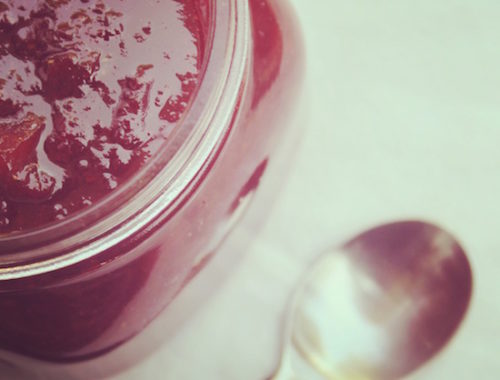
Yields about 5 half-pint jars, which you may consume with your runcible spoon.

Pussy said to the Owl, “You elegant fowl,
How charmingly sweet you sing!


Related Posts Plugin for WordPress, Blogger...

19 comments to Quince-Orange-Cardamom Marmalade

  • Julia

    That is just gorgeous. I have my runcible spoon at the ready! Just curious: what do you do with your quince pulp?

  • kaela

    I love happy accidents! And we all know I've had a-many when attempting a Ferber recipe. Looks gorgeous. And, yes, since I have a quince jelly in mind (will she never learn??), what DO you do with the quince pulp? Enquiring minds want to know.

    • Janice

      I hate wasting ANYTHING. With the quince pulp, extract any cores etc, puree the pulp anyway you like, then add cup for cup of pulp and sugar and make quince paste.
      Basocally for quince paste boil gently together until very thick. Watch it doesn’t catch, or splash you. Fantastic

  • Shae @ H2H

    Julia and Kaela: Way to bust me. I wasn't sure what to do with it — so full of cores, peels, and seeds — and I didn't quite have the energy to play with the food mill, so I composted it. That said, put through a food mill and mixed with apples, don't you think it might make a nice apple-quince sauce? I bet it would. Also, I have here this recipe for quince chutney, which underscores that after you chop and cook the quince, you should strain and keep the juice for jelly or . . . ice cream! So that's approaching it from the other side, but it's pulp for thought.

  • Julia

    Noooooo! You composted it. Wow. That would have been possible membrillo!! Next time, next time…I do understand the impasse with the food mill. Sometimes, I just throw it all in the fridge and do it in a day or two.

  • Denise | Chez Danisse

    Looks like a tasty mistake. Now I'm wondering what type of quince I ate in my fruit salad from Tomales Bay Foods. Whatever it was, I loved it. I ordered it two days in a row. I wasn't really sure when I was biting into an apple or pear or quince. I think they were all poached. I know there was quince and then maybe apple…maybe pear. I did recognize the cranberries. I want to glow like quince juice in the morning…

  • Gloria

    I've never heard of pineapple quince. Does this refer to the shape of the fruit, as the apple and pear quinces do? I too would have been tempted to make a quince butter from the jelly bag pulp. I've got a vintage attachment for my Kenwood Chef that does the food milling thing for me. Changed my flippin life! But I now make so many butters from different pulps, it is starting to get out of hand. Am starting to feel a bit sorry for this Ferber woman. We've been picking her apart all year. Totally fab recipe, thanks.

  • Sandra Barradas

    So happy that I found your Blog!!
    In the next days I'll spend a lot of time where I'm sure…

    THANKS A LOT!!
    Sandra

  • Shae @ H2H

    Denise: You will get to taste my mistake for yourself! I'm curious about types of quince, too. Now I am going to ask whenever I encounter them.

    Gloria: I think the name pineapple quince comes from the scent. That's my best guess, because when I first got them and stuck my nose in the bag, I said, "They smell like pineapples!" Made my whole kitchen smell that way, too. I'll try something with my "used" quince pulp next time, and I'll see what I think of the flavor and texture. I wish I could find something to do the food milling thing for me!

    Sandra: Hello and thank you! I'm glad you found your way here, too. :-)

  • Anonymous

    Hmmm, about how many quinces did you use to make 4 cups of juice?
    Thanks,
    Esther

  • Shae @ H2H

    Hi Esther: Now that's a good question, and one I should have addressed from the start. I think I began with 8 or 9 large quince that I cooked down to 8 cups of juice. So I'd say at least 1 good-sized quince per cup of juice that you want, maybe tossing in an extra to be safe. Thanks for asking!

  • Elle Ross

    Hi Shae, thanks for the great marmalade posts, very helpful. I just made a small batch of Clementine Marmalade that looks and tastes really great, but is still pretty runny. I did everything that is typical for marmalade, except I did not let it set in the fridge overnight. Could that be why it did not set?
    I would like to attempt it again (1 crate only made 6 jars) but have it set this time.. any advice?

  • Shae @ H2H

    Hi Elle: I'm sorry your Clementine Marm didn't set well. I don't know what recipe you used, but from what you say I'd guess that skipping the soaking step could have a lot to do with the setting issue. My understanding is that it's important to let the fruit rest in the liquid so that its properties — including that all-important pectin — can sufficiently infuse the liquid portion. If you skip that, you could end up with exactly what you say . . . runny. Will you let me know how it goes if you try again?

  • Hi Shae, I’m so happy to see that painting here, it does tell the whole story, doesn’t it. Lovely to have shared some of this story with you along the way. I am NOT surprised that you are rocking out right now with all your successes, it comes from following your heart and taking the time to go deep and listening in.

    Keep on, keeping on doing what you love….

    Annie

  • Oh yum – I just made this (w/ some deviations – skipped the cardamom, used blood oranges, and doubled the lemon juice b/c I was using Meyer lemons) and it is gorgeous. Thank you for sharing the recipe!

  • Elle

    Hi, can you use normal lemons? I am afraid I do not have access to meyers.

    • Shae

      Hi Elle: I’m not quite sure what you’re looking at here. This recipe doesn’t call for Meyer lemons — only the juice of one regular lemon. Can you clarify? Thanks!

Leave a Reply


You can use these HTML tags

<a href="" title=""> <abbr title=""> <acronym title=""> <b> <blockquote cite=""> <cite> <code> <del datetime=""> <em> <i> <q cite=""> <strike> <strong>