Black Mission Fig Jam with Candied Ginger and Vanilla Bean
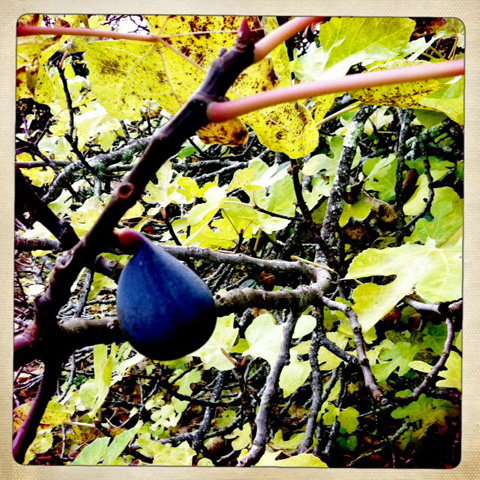
I’ve spent the past few weeks staring at a fig.
It’s just a fig.
But it had something to say to me, and so did the stately tree it came from. The tree is taller than a house. It’s the biggest fig tree I’ve ever seen, and it has several companions of almost equal size. The fig reminded me of a story.
How Figs (and I) Came to California
A long time ago, a passel of Mediterranean immigrants decided that the west coast of North America looked like a good place to start a new life. That’s why the black-purple fig is here. Black Mission figs were first planted at Mission San Diego in 1769. And that’s why I have dark brown eyes.
My Portuguese great-great-great grandfather, Frank, came to this part of the world on a whaling ship around the time California became a state. After deciding to stay, he sailed all the way back around Cape Horn to the Azores to claim his forbidden love, Izabel, who was a servant in his family’s home. She was already pregnant with my great-great-grandmother on the long ocean voyage back to California. I feel queasy just thinking about it.
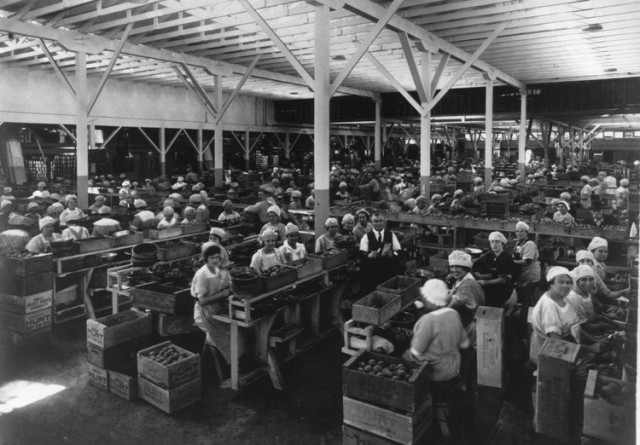
My Portuguese family, if I understand correctly, were working class, agricultural folk; they were blacksmiths, seamstresses, merchants, orchardists. Among other things, they grew prune plums in Hayward, a bustling farm community that had an enormous canning factory. The following photo was taken in 1920, when some of the women would have been my great-grandmother’s age.
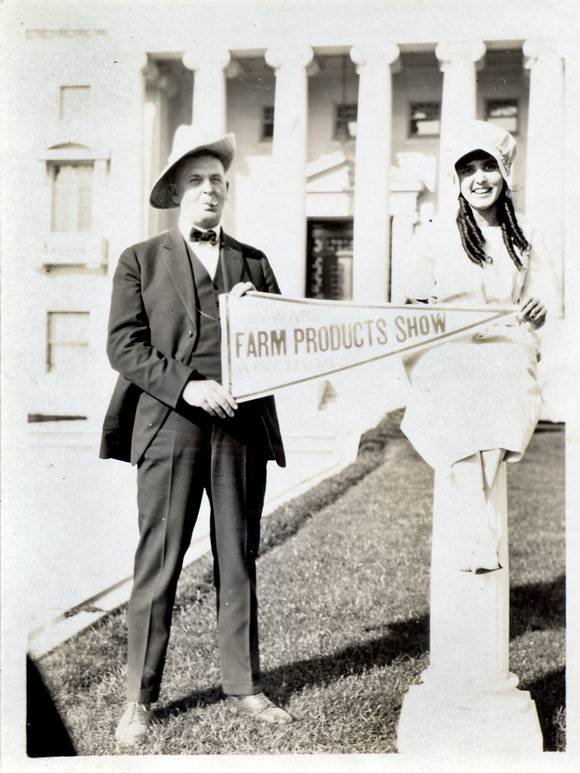
As far as we know, Nonnie never worked at the cannery. She was, however, crowned the queen of the Hayward Farm Products Show in 1914. Here she is—but who’s that guy? We don’t know.
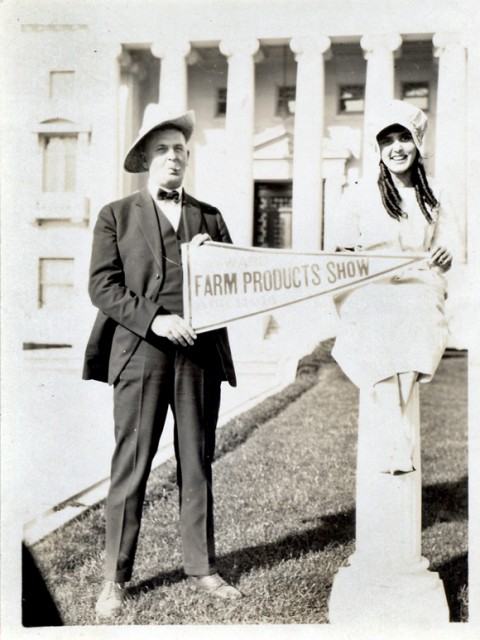
She’s in the center of this photo at the back, surrounded by her “court.” (Whoever labeled the photo certainly misspelled her name, but does that also say “Qween”?)
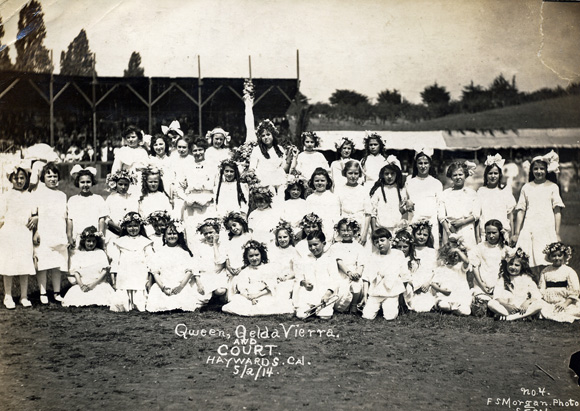
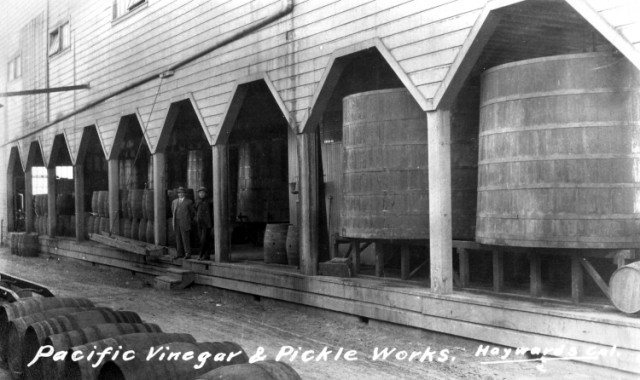
My mom and I have been debating whether Nonnie’s official title was “Prune Queen” or “Pickle Queen.” I’ve always thought “prune,” while my mother leans toward “pickle.” We have some research ahead of us, but the next photo may be evidence in my mother’s favor. It’s a picture of the Pacific Vinegar and Pickle Works, which was also located in Hayward at the time.
People who have known me during other phases of my life are usually amused when they hear about my passion for fruit and canning. They wouldn’t have thought I was the type. I wouldn’t have thought so, either. I grew up with little knowledge of my family’s agricultural roots, and I would never have imagined there would come a day when I’d be knocking on doors, asking to visit my neighbors’ trees. Or when I would secretly dream of planting an orchard of my own. But when I’m close to a great, fruit-bearing being like the old Mediterranean fig tree, I feel something undeniably familiar.
That fig was probably my cousin.
And now I’ve eaten it.
The Recipe
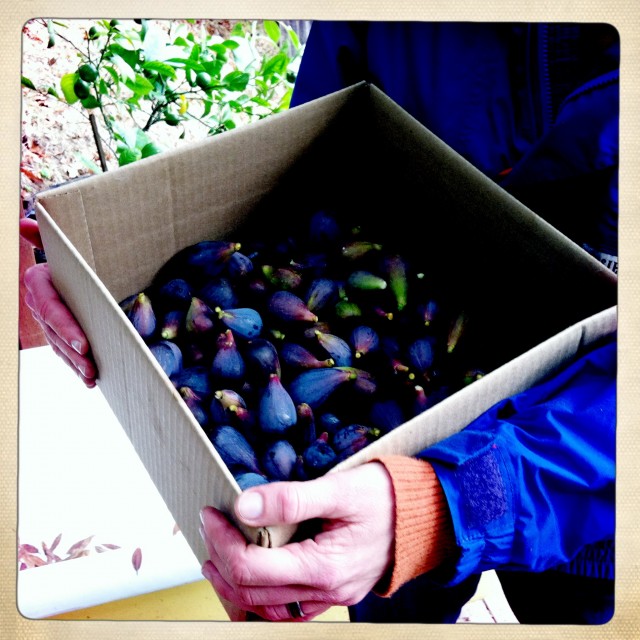
It was actually a poor season for Black Mission figs this year, and much of the fruit was still green at Thanksgiving. But those grandmother trees came through with one, much-appreciated box. Some of these figs were roasted with prosciutto as a Thanksgiving appetizer. Some of them went into an attempted figgy pudding that we’re not even going to discuss here. (There are so many reasons why mine is not a blog about baking.) The rest made a lovely small batch jam with candied ginger and vanilla bean.
Black Mission figs can vary tremendously in quality. For jam, you want them to be ripe, but not overly so. Ideally, they will be sweet and rich to the point of lusciousness. Taste before you bring them home.
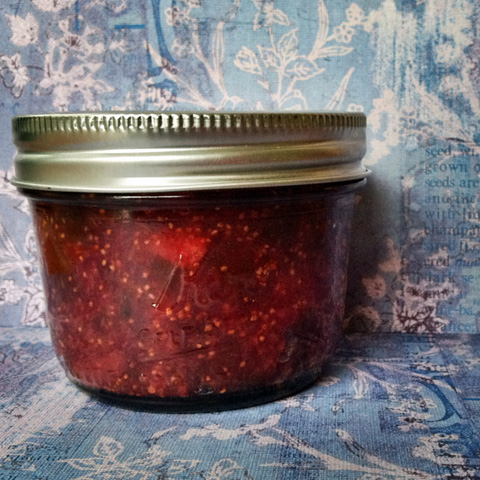
Black Mission Fig Jam with Candied Ginger and Vanilla Bean
2 3/4 pounds ripe black mission figs
3 cups sugar
1 vanilla bean
3 ounces lemon juice
4 ounces candied ginger, finely chopped
1 tablespoon Grand Marnier (optional)
Day One: Prepare the Figs
1. Wash and stem the figs, then chop them roughly and put them into a large, nonreactive pot so that they form a double layer. Add a little bit of water — about 1/2 inch — to the bottom of the pot. Bring to a simmer and cover. Continue to simmer, stirring occasionally to prevent sticking, for about 20 minutes or until the figs are tender.
2. Remove the figs from the heat and transfer 1/2 of the mixture (figs and liquid) to a Vitamix, blender, or food processor. Puree the transferred figs, but do not liquefy them; they should still be slightly chunky.
3. Measure the sugar into a bowl. Split the vanilla bean lengthwise and, using your thumbnail, scrape the seeds from the bean into the sugar. Mix well, then toss the pod into the sugar, too.
4. Combine the cooked figs, pureed figs, sugar with vanilla bean, and lemon juice in a large glass or ceramic bowl. Cover the bowl tightly, place it in the fridge, and let it rest 8-12 hours, or overnight.
Day Two: Make the Jam
1. Sterilize your jars and put five metal teaspoons in the freezer to test the jam for doneness later.
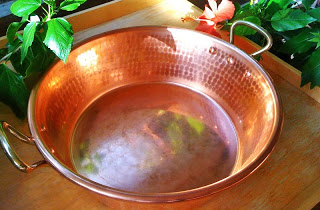
2. Take the fig mixture from the fridge and transfer it to a large jam pan. (I used an 11-quart copper pan.) Stir in the candied ginger.
3. Turn the heat to high and bring the mixture to a boil, stirring occasionally. Then decrease the heat to a steady simmer and cook, continuing to stir as necessary to prevent sticking. After about 10 minutes have passed, mash the fruit with a potato masher. Continue to cook until the jam thickens, reducing the heat a bit if the jam starts to stick. My jam was done in about 16 minutes. See below for notes on testing your jam to see if it’s done.
4. Stir the Grand Marnier into the hot jam. Ladle or pour the jam into the sterilized jars, leaving 1/4-inch headspace. Run a silicone spatula or chopstick around the insides of the jars to release any air bubbles and wipe the rims of the jars clean. Add lids and process 10 minutes in a boiling water-bath canner.
Makes about 6 1/2 half-pint jars
Testing Your Jam for the Gelling Point
To test your jam, remove the mixture from the heat. Use one of your frozen spoons to scoop up a little bit of jam—not a whole spoonful. Return the spoon to the freezer and wait 3 minutes. Retrieve the spoon and hold it vertically. If the mixture runs very slowly and it has substantially thickened, it’s done. Alternately, give the mixture a little push with your finger. If you see creases or wrinkles, it’s ready. If the jam is still runny, cook it for 2-3 minutes more (gently stirring all the while) then test again.
Love the family history lore and how it ties into your love of jam making! I spent the summer tracking my roots in England and although I haven’t found the connection yet, I’m pretty sure my Kilner ancestors are related to the canning jar inventor John Kilner. Blood will out as they say…
I hope you find out, Callie. And now I know who invented the canning jar!
What a wonderful story! Family history and vintage photos are so fascinating to me. Fresh figs are absolutely divine and I wish our climate was more kind to fig trees. Or yet another indoor fruit tree to have to convince my husband is necessary . . .
Are you growing an indoor orchard now, Dawn? I’m with you on the old photos. They are so often mesmerizing — and it doesn’t even matter whether I know who the people are.
Gosh, Shae, I love hearing stories about your family! And such great pictures, too. It all makes sense now, doesn’t it? ; )
I’ve been waiting to hear about these figs and what they became. It sounds luscious.
Yup, got it all figured out now! Ha. The jam was good. Maybe next year I’ll try another figgy pudding. Maybe.
What a great story and wonderful photos! I am especially excited to dig into my jar now knowing some back story! I used to live in the Azores, when I was little =)
Meg, I want to hear about that! I’m hoping to visit there, someday, myself.
Loved this post. I really enjoyed reading how you made the connection between the attention grabbing fig and your great-grandmother. You had me wishing there was a fig tree near me so I could make your jam out of freshly picked figs.
Thank you, Dana. Now, oh my goodness, I’ve fallen into your blog and I can’t get out. It’s wonderful!
Shae, this is an amazing story. It makes sense to me why you have a connection to the land and fruit and valuing skills that all but seem lost (though not so lost anymore happy to say). Maybe this is the reason I jam and plant and love the process too. My Great grandparents sailed from Spain around Cape Horn (yes) in the late 1800, though first landing in Hawaii for a few years before coming to the bay area. Being very poor my grandmother and her sisters, barely teens, started picking and canning from Sacramento to Monterey. Eventually they settled in Monterey canning sardines and where my grandmother met a handsome Italian fisherman who became my grandfather.
We have similar roots! Oh – and LOVE the Pickle/Prune Queen! That is precious!
Well, Janis, I thought I recognized you! Seriously, thank you so much for this lovely comment and for telling me this part of your story. We think great-great-great grandpa Frank came ashore at Monterey, too. Next summer, I hope we might go blackberry picking at the secret spot and swap family tales. :-)
great post shae! the photos, history, connection, jam! you are not only the artful jammer, you are the thoughtful jammer. i love reading your blog. :)
Tigz, thanks for padding around here on your Cool Cat’s feet!
Lovely post, wonderful pictures, beautiful story! I will read anything about figs, and eat anything with them in it.
Love the story! I have a fig tree I grew from a cutting that originated from a fig orchard in sicily. Started giving Fig Jam as Christmas gifts to friends and Family. Would love a cutting from your tree if possible as we would love black figs here in Texas